How Do Mute People Communicate in Everyday Life?
Mute people navigate daily life using sign language, writing, gestures, apps, and high-tech devices with remarkable effectiveness. This comprehensive overview provides practical insights and interaction tips for empathetic engagement.
Editorial Team
Core Methods: Hands, Words, and Tech
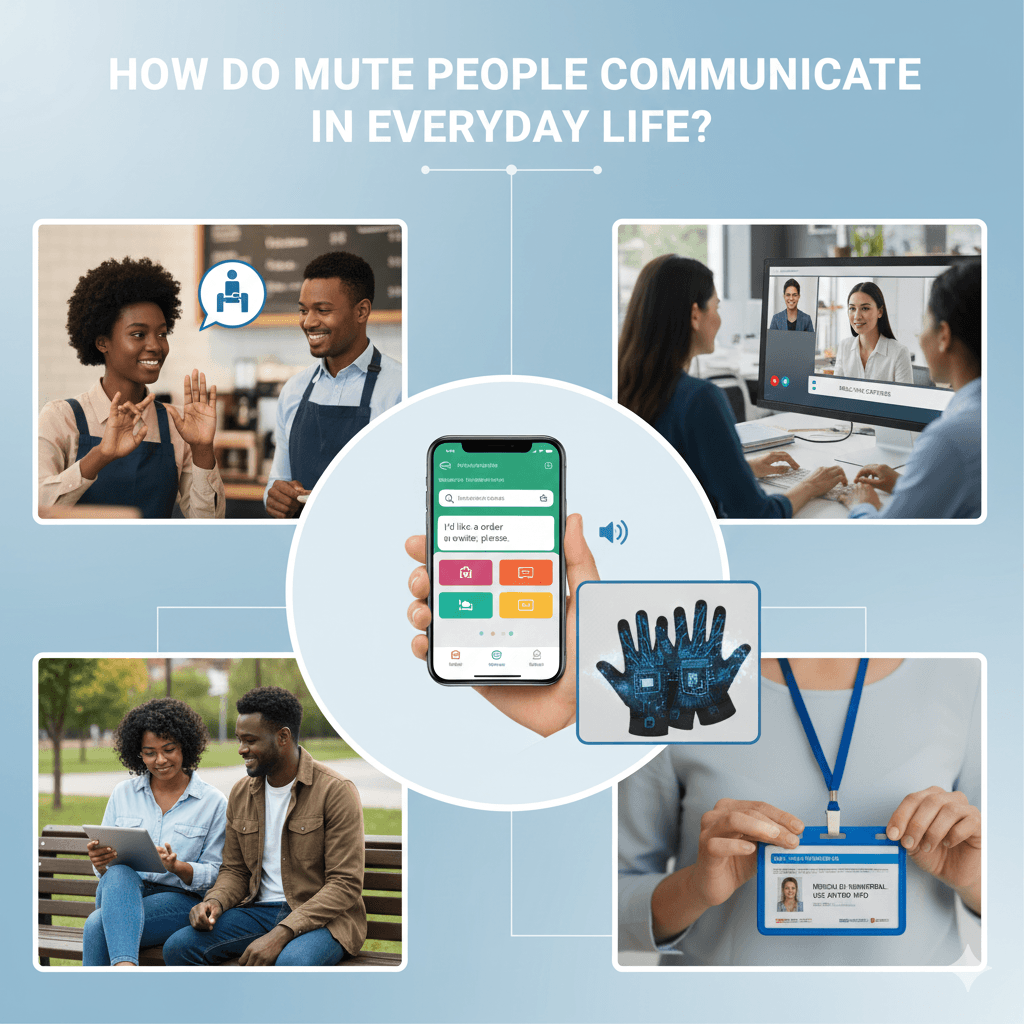
Sign languages form the backbone, offering nuanced expression equivalent to spoken tongues, ASL in the US, BSL in the UK, and regional variants worldwide. Simple tools like notepads, texting, or whiteboards handle quick exchanges universally.
Facial expressions and body posture provide critical context, amplifying clarity.
Advanced Assistive Technologies
Augmentative and Alternative Communication (AAC) devices range from basic picture boards to sophisticated speech-generating apps like Speak4Me or Tobii Dynavox, which vocalize typed or selected phrases. Innovations include gesture-sensing gloves that convert signs to speech in real-time and AI-powered apps for predictive text.
These empower independence across ages and abilities.
Real-Life Applications
- Workplace: Video relay services with interpreters, collaborative apps like Slack with captions, or email for detailed discussions.
- Social settings: Shared digital whiteboards, pre-programmed response cards, or family-learned signs for fluid chats.
- Emergencies/Public: Medical ID cards, apps with one-tap alerts, or wearable devices for vital info.
- Education: Real-time captioning software and peer sign training.
Adapting to these builds patience, observation skills, and profound connections, accelerating personal growth.
Tips for Effective Interaction
Face them directly for lip-reading if needed, give extra processing time, and confirm understanding without pressure. Practicing these refines your communication prowess universally.