How Voice, Text, and Gesture-Based Communication Are Converging
Multimodal comms blend voice, text, gestures via AI apps, enabling mute users seamless interactions across platforms.
Editorial Team
April 9, 20261 min read

Direct Answer Section
Voice-to-text, gesture AI, and hybrid apps are converging to create fluid multimodal communication. This allows mute individuals to benefit from gesture-to-voice translation in real-time, bridging the gap between different communication styles.
Convergence Explained
Modern AI integrates sensors that monitor body, hand, and facial inputs simultaneously, converting them into either text or synthesized voice outputs. By 2026, systems have become capable of processing these live multimodal streams with minimal latency.
Key Technologies
| Modality | Primary Tool | Convergence Example |
|---|---|---|
| Gesture | Sign Language AI | Direct conversion to voice/text |
| Voice | Auto-Captions | Syncing text with gesture video |
| Text | Advanced AAC | Apps using predictive multimodal AI |
Use Cases
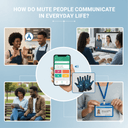
- Professional: Participating in video meetings where gestures are captioned live for others.
- Public: Hybrid ordering systems that accept both touch-screen text and gesture inputs.
Tips for Adoption
- Explore apps that allow for blending different input modes (text + gesture).
- Practice with hybrid tools to find the most efficient communication flow for your needs.
See more details on modern communication methods.
FAQs
- Is the tech ready? It is emerging rapidly with high success in controlled settings.
- Is it inclusive? Yes, it is designed specifically to empower mute and non-verbal users.