Why Can’t Some People Speak? Causes of Mutism Explained Simply
Mutism stems from physical trauma, neurological disruptions, psychological anxiety, congenital factors, or injuries, explained accessibly without jargon. Gain insights to support inclusion and personal enlightenment.
Editorial Team
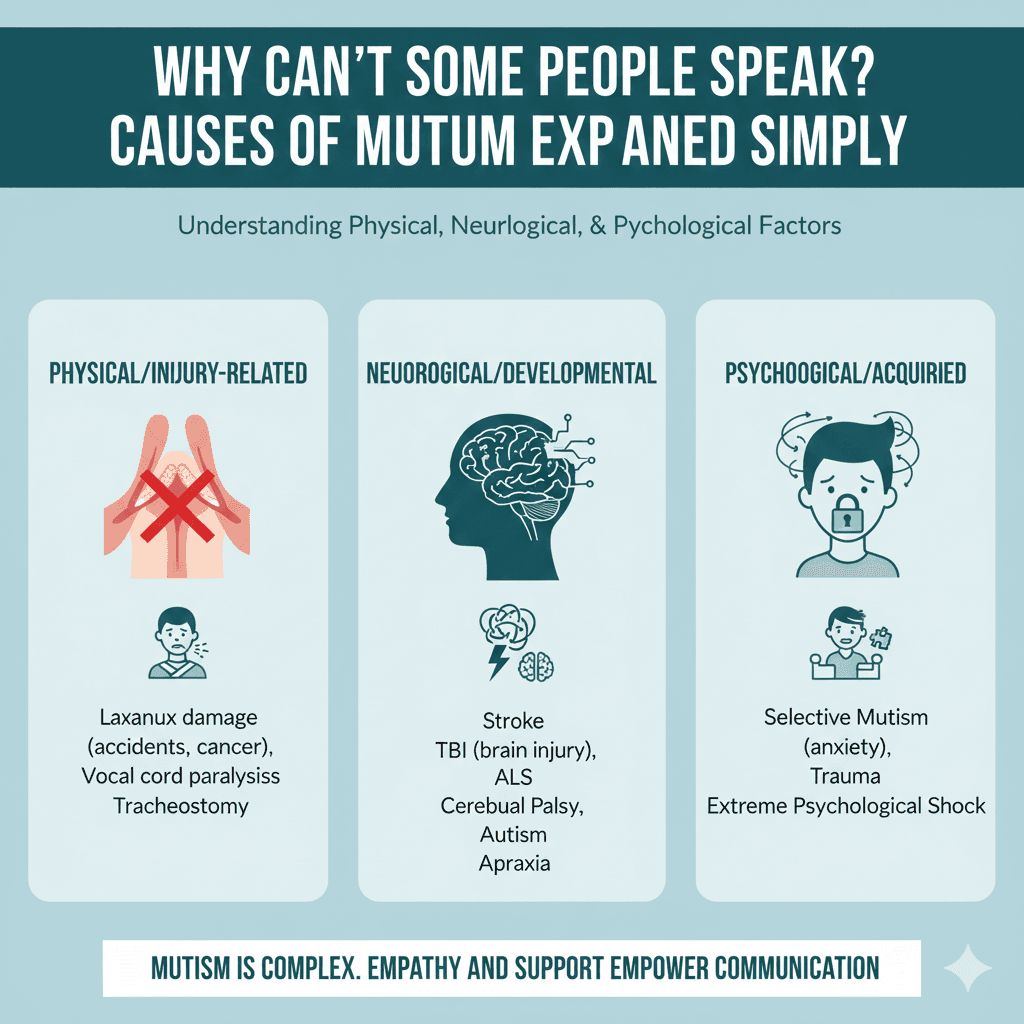
Physical and Injury-Related Causes
Damage to the larynx from accidents, surgeries, infections (e.g., laryngitis), or growths like polyps/cancer prevents vocal cord vibration. Swallowing disorders or tracheostomies further block airflow for sound.
These halt speech mechanically but spare other expressions.
Neurological and Developmental Origins
Brain events, strokes, tumors, traumatic injuries, or degenerative diseases like ALS/Parkinson's, sever signals from thought to voice. Congenital issues, such as cerebral palsy or certain autism presentations, wire speech pathways atypically from birth.
Apraxia adds motor planning failure for mouth movements.
Psychological and Acquired Factors
Selective mutism manifests as social anxiety freezing speech output despite physical ability, often with genetic links, bilingualism stress, or trauma history. Temporary mutism follows extreme psychological shock.
Therapy addresses roots effectively.
Pathways to Understanding and Support
- Prevention/Support: Early intervention, speech therapy, counseling.
- Growth Lesson: Exposure demystifies, inspiring advocacy and adaptability.
- Key Takeaway: Mutism reveals communication's breadth, urging us toward inclusive mindsets.
Knowledge empowers empathy, transforming perceptions into action.